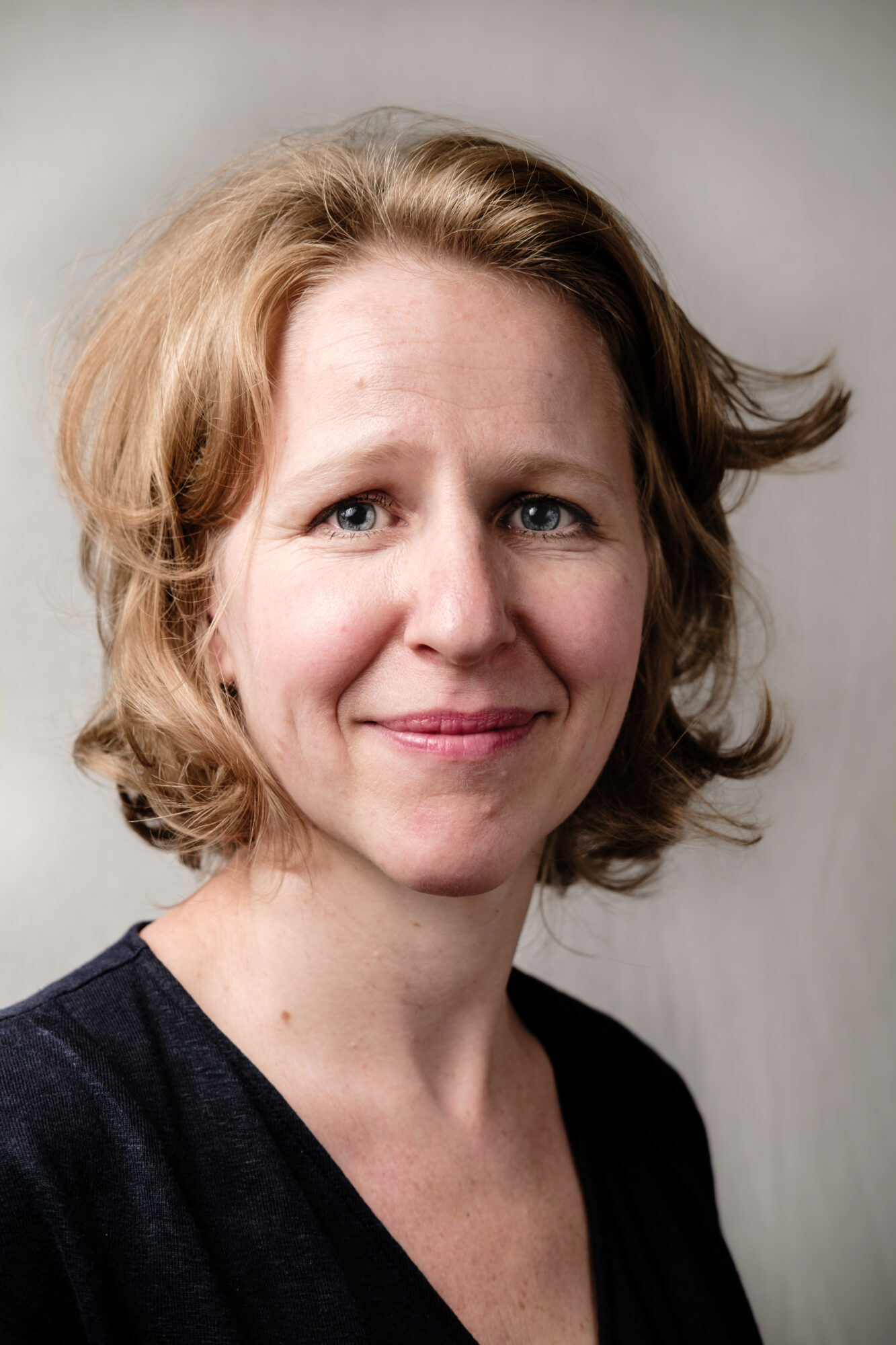
After nearly two decades of reporting on the EU, Swedish journalist Sigrid Melchior knows her way around Brussels and its institutions by heart. Through the scope of her career, we embark on a EU journalism masterclass while being reminded of some of its core principles – its obligation is to the truth, a discipline of verification and exposing politicians whenever they lie.
By Eden Maclachlan

Photo: Fredrik Haglund
- Studied Political Science and Journalism at the University of Gothenburg.
- Nominated for Guldspaden in 2019 – investigation of Lars Adaktusson abortion vote.
- Wrote “A reporter’s guide to the EU”.
- Speaks Swedish, English, German and French.
In Brussels, the atmosphere was heavy and tense. “You could feel it in the air, people are kind of shocked,” Sigrid says. The European capital had been rocked by the manic Munich Security Conference a few days prior. “At the same time they shouldn’t be, they should have known what was coming with Trump’s second mandate” she adds with a subtle tone of Swedish rationality. But for the EU correspondent for Dagens Nyheter, it was a slow Monday morning. The EU circus was in Paris, so she had time to talk.
Moving to Brussels always seemed inevitable for Sigrid Melchior. This EU-nerd settled there in 2007, the day after her final exam, and she hasn’t looked back since. An intrepid freelancer pitching stories for outlets interested in “whatever she was interested in”, at first, she quickly established herself in the EU-bubble. But what makes the EU so attractive to a journalist?
Reporting on the EU – a “detective work”
“EU and national politics are very different,” Sigrid argues. The fact that 27 countries and countless political parties are involved add layers of complexity. “It’s a highway of opinions” Sigrid jokingly states. “Countries have different positions on certain topics.” Therefore, she views EU reporting similar to detective work. “You never have the full picture of a story in the beginning. It’s something I really like.”
Meanwhile, her biggest challenge resides in interesting her audience on EU issues. “I wish I knew the answer. I think everyone’s struggling with that,” she bluntly tells. You need a mix of vegetables and sweets,” she adds, explaining that the sweets are the stories that will engage, and the vegetables the ones that should be highlighted.
Cross-border collaborations
From 2019-2023, she worked with the cross-border network Investigate Europe, where she investigated topics of interest in various EU countries. In a cross-border setting, the team would share material, support each other with interviews and fact-checking. Then, the story was adapted for each reporter’s specific audience in order to have a broader reach.
Sigrid remembers the work at Investigate Europe as “being very organic, very efficient, but also sometimes slow”. As she emphasizes on the importance of trusting each other, at the same time, “I might want to control what they’ve written so they don’t accuse someone for something they didn’t do or say”.
Journalism: a discipline of verification
Being a feminist and her hatred for lies sparked the investigation of Lars Adaktusson abortion vote. The former MEP repeatedly voted against motions that expressed support for the right to abortion, despite claiming the opposite. Exposing the lying politician resulted in a Guldspaden nomination and it became her story which had the biggest impact. “I wasn’t ready for it. It was the first time that a lot of people talked about something I wrote, and politicians attacked me on Twitter. It was scary. I knew that if I made a mistake, then my job as a journalist would be over. I tripled fact-checked everything.”
Sigrid can not stress enough the importance of fact-checking and doing honest work – and that the EU is in need of more investigations to reveal wrongdoings affecting us all. “It is important to know what politicians are doing.”