by Norah Lång
Amid a political crisis and a pressured media sphere, investigative journalist Saša Dragojlo is unveiling the wrongdoings of Serbian powerholders. He has dug into everything from gun exports to people smuggling, aiming for a future free from authoritarian rule.
“I am often getting comments like: ‘Are you afraid of this?’ But I am so deep into it that I do not even reflect on that.”
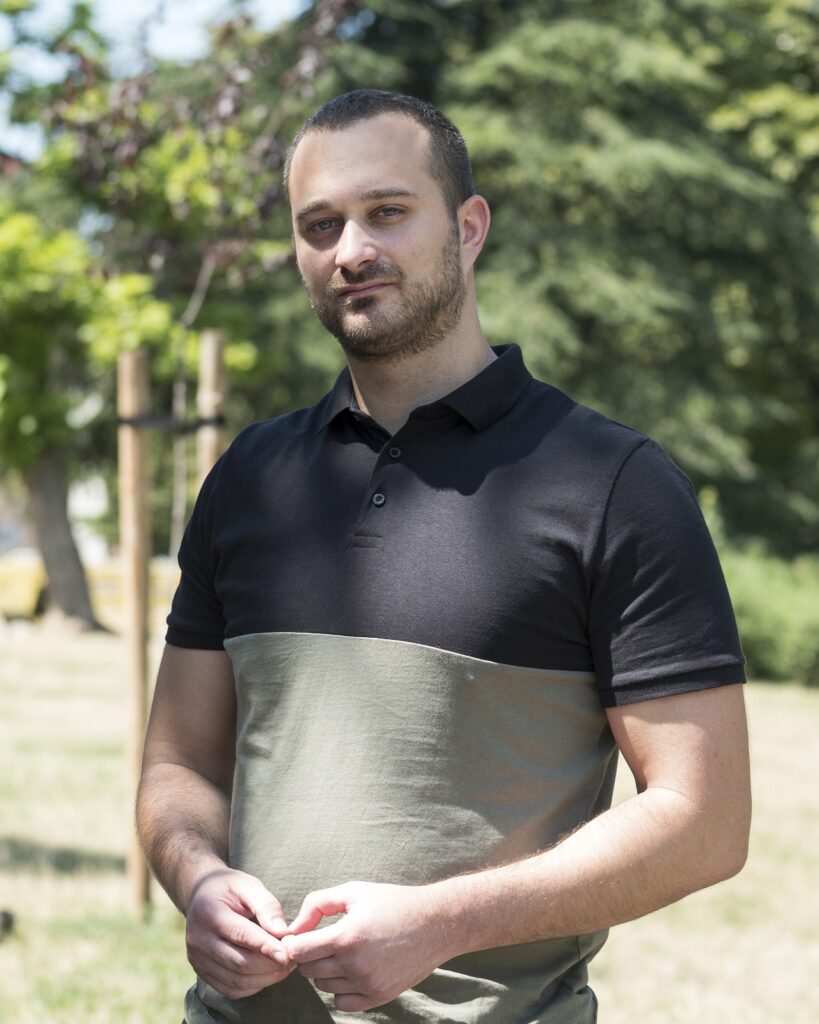
Name: Saša Dragojlo
Age: 34
Lives in: Belgrade, Serbia
Profession: Investigative journalist at the Balkan Investigative Reporting Network and The Balkan Insight
Photo: Private
On 1 November 2024, the roof of the central railway station in Serbia’s second biggest city, Novi Sad, collapsed – killing 15 people. The event sparked a massive student-led protest movement, with many filling the streets to demonstrate against “misgovernance and corruption”. On 28 January 2025, Prime Minister Miloš Vučević resigned, and critics are now pushing President Aleksandar Vučić to do the same.
In this political turmoil, investigative journalist Saša Dragojlo is digging into the dirt of Serbia and the rest of the Balkans.
“We have a lot of sources reaching out to us and lots of things going on. It is a bit exhausting – but this is the time.”
Serbia is a parliamentary democracy with multiparty elections, but in recent years, Vučević’s and Vučić’s Serbian Progressive Party have steadily eroded political rights and civil liberties, while pressuring independent media, the political opposition and civil society organizations.
“The future of investigative journalism in Serbia is not bright when it comes to funding, and powerful people do not want anyone to mess with their business. But this is the very reason why I think investigative journalism is going to be essential in the future.”
Reaching high and low for sources
We meet over a video call – Saša Dragojlo in his home office, with a poster of the 2003 Lars von Trier movie “Dogville” on the wall behind him.
As in “Dogville”, issues of power, violence, crime, corruption and hypocrisy are central interests for him. He has dug into the 2023 murder of a Kosovo Albanian police offer in Northern Kosovo, Serbian gun deals with Israel and Myanmar, the Serbian Syrian police translator who led a people-smuggling gang, and more.
Developing a network of sources that spans different demographic groups is crucial.
“In Serbia, there are a lot of situations where the government is concealing things. You need to have a human source that was involved, who had access to documents or conversations.”
Being a contributor to the Balkan Investigative Reporting Network and its media outlet The Balkan Insight, he has a wide perspective on all of the Balkan countries.
“We are pushed to do cross-border stories. If you do something related to organized crime, human trafficking or labor exploitation, there is a lot of movement of people. I did a lot of stories on arms trade – that is also something that goes beyond borders.”
Journalist or prosecutor?
In Serbia’s polarized political climate, journalists are subject to political pressure and unpunished crimes – some by the ruling elite. In addition, journalists critical of the government have restricted access to interviews and public information.
“The Aleksandar Vučić authoritarian rule made the parties into a corporation, slash mob. It is only about opportunistic interests. My colleagues and I published many great stories that could work for indictment, but it is rare that someone gets arrested”, Saša Dragojlo says.
Psychologically, this can be hard.
“At the end of the day we did what we could. People often take journalists for prosecutors – but we cannot be that.”
He describes his investigations as being for “the historical archive”, which makes him persistent – even when the effects are not tangible.
“If you’re a conscious political being, and you want to bring good to the community, you can be an activist, a politician, or a journalist. I found that this is the most effective way.”