From racial justice in the U.S. to healthcare corruption in Uganda, American writer, photographer and filmmaker Katie G. Nelson has reported groundbreaking stories worldwide. Her passion for giving people a voice is rooted in her own personal struggles.
By Louise Ekberg
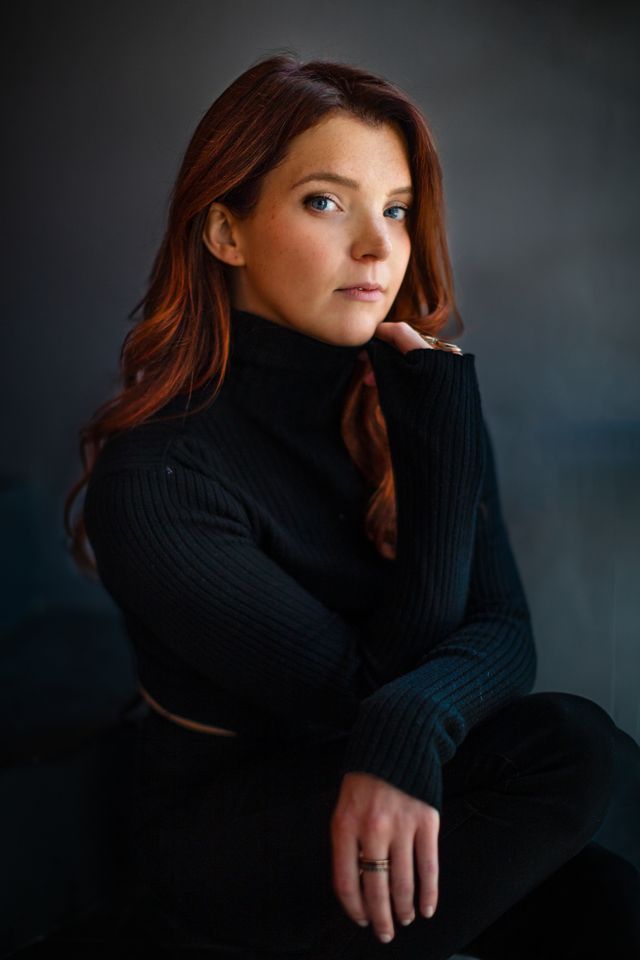
Credit: Raquel Cunha
- Bachelor of Arts and Master of Public Health, University of Minnesota.
- Co-owns Far on Foot Productions.
- Former Vice Chair, International Press Association of East Africa.
In recent weeks, Katie has found herself in the middle of a perfect storm after President Trump reentered the White House. She was just about to book a flight to report on a USAID-funded project in rural Kenya when the government paused all US foreign aid for 90 days.
Living in New York and witnessing the crackdown on journalists, Katie fears for the impact of Trump’s leadership on press freedom and individual security. She also worries how the USAID freeze will affect East Africa in maintaining health services and human rights.
Nobody Has Figured It All Out
In 2013, Katie was diagnosed with a sleeping disorder that deeply impacted her life and career. Her condition made newsroom work difficult and pushed her into freelancing. When writing became nearly impossible, she picked up a camera and taught herself photography and filmmaking.
Despite paving her own path, she still has unanswered questions. She recalls a conversation with her friend Ben Solomon, Senior Video Correspondent at The Wall Street Journal, about how even journalists with staff jobs and editorial support struggle to survive financially.
Over the years, she hasn’t seen many compelling ideas that are financially sustainable. She believes that you can’t balance great story-driven work with marketing and running a business on the side. “Personally, I don’t want to be buried in my grave with a bunch of content, I want people to remember my soul and my stories,” she says.
Beyond Being Proud
Katie is best known for reporting on the police killing of a Black American man named George Floyd in 2020. She covered the protests in the streets of her hometown, Minneapolis, for almost two years. “I hear him crying for his mother to this day, and the horror of it has not left me,” she says about the body cam footage she was the first to obtain from the police. Her team’s visual investigation remains one of the most viewed videos in The New York Times’ history.
Aside from groundbreaking stories in the U.S., her career is also shaped by her time as a foreign correspondent in East Africa. For her proudest work, she exposed how Ugandan officials refused to restore the country’s only radiotherapy machine, leaving patients with treatable cancers to die. She named the health ministers in her Al Jazeera piece, forcing them into finally replacing the machine. Tragically, all her sources had already passed away by then. “Truly, there is nothing more shameful than the suffering that those patients went through.”
Create a Legacy, Not Content
Although Katie has many stories to be proud of, her greatest achievement is making people feel heard. Because of her own suffering, giving people a voice is close to her heart. She proudly shares the story of a Black American mother, whom Katie and her filmmaker spent 10 hours during the protests following the police killing of Daunte Wright in Minnesota. Katie recently learned that the mother is running for a government position, wanting to keep telling her story.
She is shocked by how many journalists don’t care or aren’t good listeners and says, “The greatest journalists I know are human first and journalists second.”
At a time when journalism is under threat once again, Katie sheds light on what matters: “to truly be with people and tell their stories.” Her best advice is to learn how to tell a story in multiple ways as a writer, photographer and filmmaker. But above all, she reminds that “other journalists are not your enemies or competitors, they are your colleagues and friends.”