
Selling Christmas Trees: A Harsh Profession Driven by Tradition
by Matthijs Touw in collaboration with Isa Baas (MIJ Times)
Christmas is around the corner and Christmas tree sellers are popping up like, well, Christmas trees all around the city. The MIJ Post and the MIJ Times have visited various stalls in the city center of Gothenburg to gather information on this year’s Christmas tree prices. Despite the turbulent recent years and competitive market, the prices are stable. The salesmen who have been in the business for years experience difficult times but will persist.
Thommy Larsson sells his trees at the same location his father did before him, at Landala Torg. “When we started this business in the seventies, we took like 10 crowns for a tree. But since the seventies, prices for everything have gone up.” The last few years the prices have stayed more or less the same, despite Covid, inflation and adverse weather, according to all the salesmen we spoke.
Julgran or Kungsgran?
In Sweden two types of Christmas trees are most commonly sold: the julgran (“Christmas spruce”), that has a bit of a red hue and the Kungsgran (“Kings spruce”), which is more luxurious.
Most of the Kungsgranar come from Denmark and Skåne. A lot of the julgranar sold in Gothenburg are grown in the region, mostly in Stenungund.
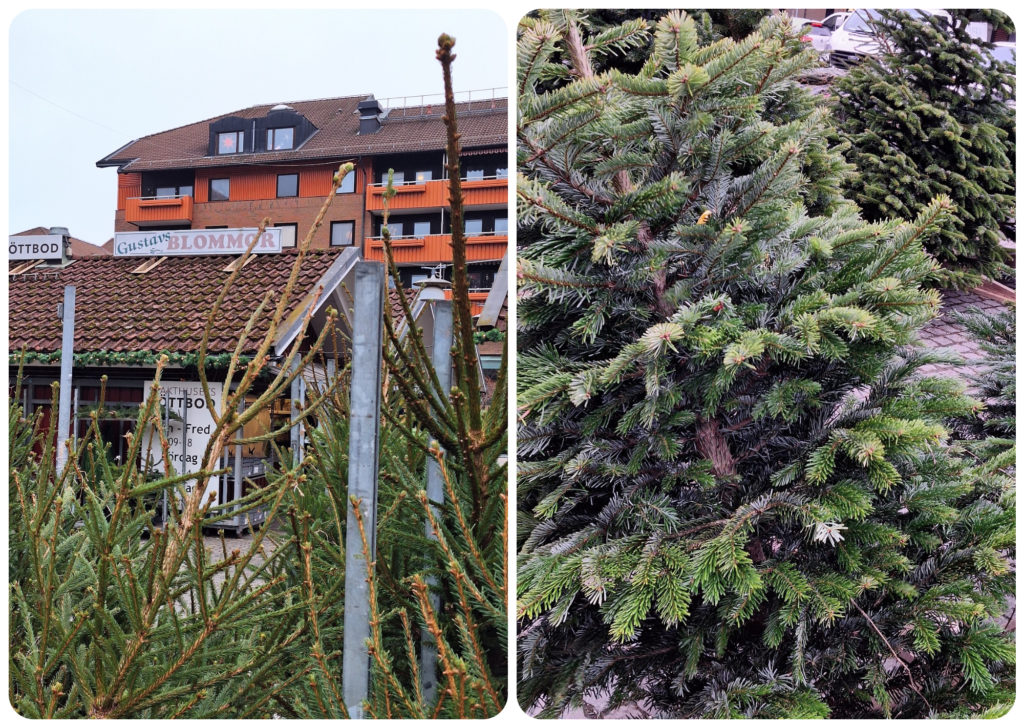
Left, julgran and right, Kungsgran. Pictures by Matthijs Touw
Hoisting Up Your Christmas Tree
The Kungsgranar are generally more expensive. Thommy says that it can take more than 10 years to get a tree from sapling to grown tree. It takes a lot of hard work to raise a Christmas tree: weeding, watering, and transporting. The map below shows the price of both julgranar and kungsgranar at different places throughout the city.
The most expensive Christmas tree encountered today is the one at Grankungarna på Heden for 1400 crowns. The salesman talked about a customer who rented a crane to hoist one of these Christmas trees into his house on a higher floor. “The houses in Heden have high ceilings, so people want huge Christmas trees.”
Family Tradition
The Christmas tree business is based on tradition. Local loyal customers come back year after year to the same sales point. Families can also enjoy the experience of cutting down their own Christmas tree at Thommy’s farm . For some families, this tradition goes back generations. “When they were a child they came to the farm and now that they have a child of their own, they try to do the same celebration,” Thommy explains.
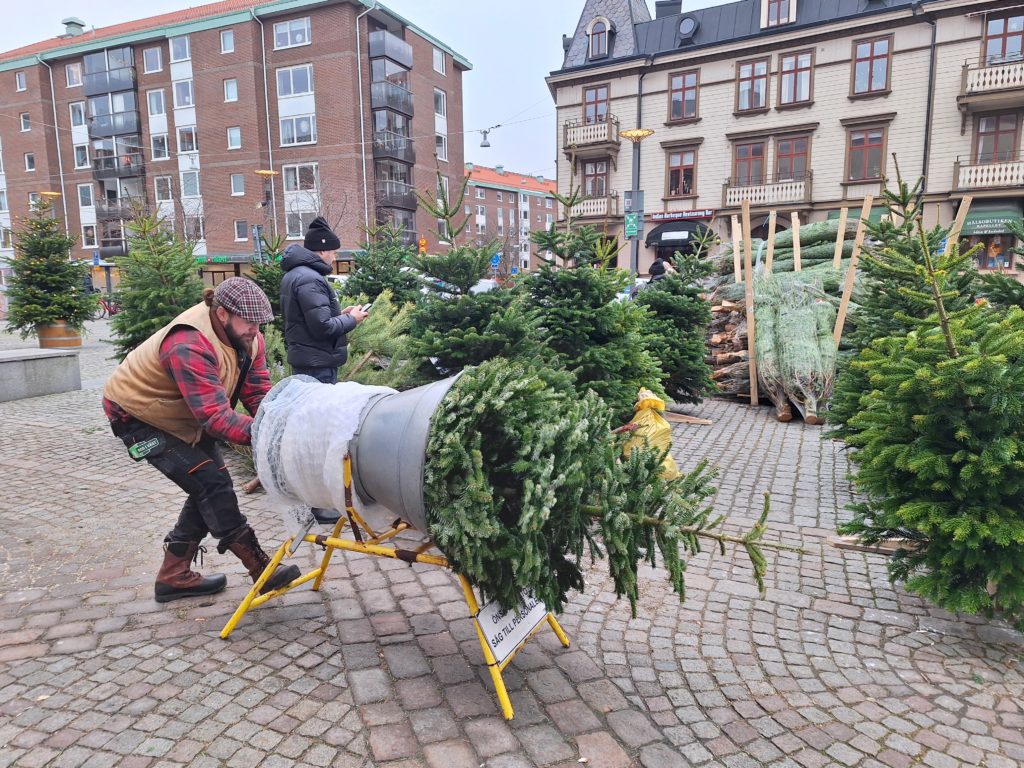
Thommy at his stand on Landala Torget. Picture by Matthijs Touw
Covid and Drought
This tradition creates a stable demand for the trees at the locations visited, despite any inflation. “Those who want a more expensive one, buy a more expensive one. Those who want a cheaper one, buy a cheaper one,” explains Sven Erik Holmedal at Gustavs Blommor.
The salesman in Heden says that everyone looks at what the competition is doing and adjusts the prices accordingly, although we couldn’t confirm this. The 2020 pandemic was a great year for the Christmas tree farmers we spoke, because everyone had to celebrate Christmas at home, apart from each other, leading to an increase in sales. In 2018, there was too little rain and a lot of trees died. Thommy now has a problem in his tree-stock, six years later.
Harsh Business
The years after 2020 were marked by high inflation. The average inflation in 2022 was 8.4 percent, with the price of gas reaching more than 20 crowns at the pump. “The worst time was when the fuel prices went over 20 crowns [per liter], we have trucks, we have motorsaws and tractors,” Thommy says. All things considered, he adds: “I wouldn’t recommend anyone to go into this business. It’s too much work”.