Sweden and other countries have representatives in Baku at the moment to take action for climate change. What the future generations in Sweden might face depends on the actions that are taken.
The 29th conference of the Parties on Climate Change, COP29, in Baku, Azerbaijan is soon to be over. The annual conference, where countries gather to decide on what actions to take for climate change, ends on November 22nd.
One of the countries present in Baku is Sweden. According to data from SMHI, Swedish Meteorological and Hydrological Institute, a continuation of emissions could contribute to Sweden getting an average temperature of 4,2-7,9 °C in year 2100.
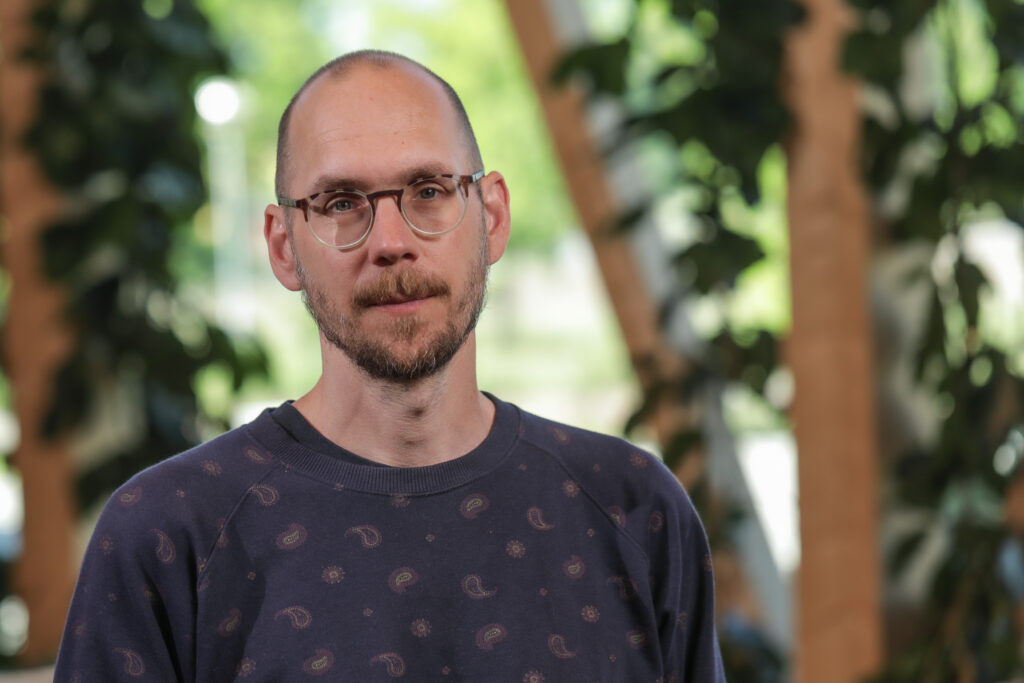
“We know that there is a climate change, we are in the middle of it, says Gustav Strandberg, climate scientist at Rossby Centre, SMHI.
How big the increase of the average temperature can get in Sweden depends on if the global emissions continues in the same rate as today or not. SMHI has calculated different scenarios by using RCP, representative concentration pathways. There are three scenarios; RCP 2,6, RCP 4,5 and RCP 8,5.
Gustav Strandberg explains that RCP 2,6 isn't that likely anymore, since that would mean that the emissions would decrease after 2020, but that RCP 8,5 is more of a drastic take since it would mean that the emissions continues and increases.
"By exclusion, that leaves us with RCP 4,5 as the most likely scenario, but then you should remember that this is because the others are worse, not because it is very accurate.", says Strandberg and adds that this scenario means that the emission rate could decrease after 2040.
Increased temperatures and extreme weather awaits
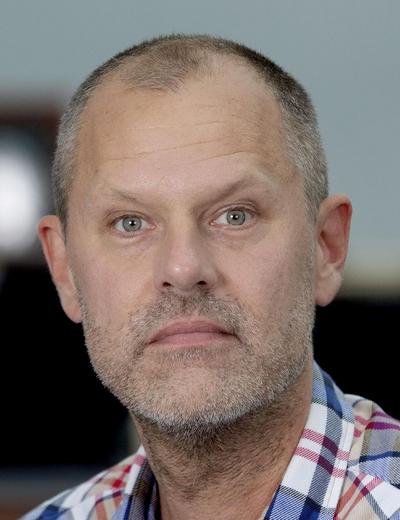
Fredrik Lindberg, professor in geoscience at University of Gothenburg, says that we no matter when or if our emissions decrease will see consequences from climate change.
"The effect of various things can be seen many, many years after a measure has been taken. It is like now, that we have put out carbon dioxide in the atmosphere since the industrial revolution, we don't really know how it will affect the future.", says Lindberg.
The professor in geoscience explains that we will get increased temperatures and more extreme weather phenomenons in the future. He says that societies accommodate, but that the effects on people already can be seen.
"You can already see that during heat waves, more people get hurt and if you have more intense and longer heat waves, the effect will be greater. But you have to have a number of heat waves also in the changed climate to be able to say something about it."

Photo: Elin Nilsson.
Younger generation about the future
While scientists and data points at various consequences from climate change, it does not seem to be the greatest worry for some of Sweden's younger citizens.
"Now I'm more worried about if a war or crisis is coming", says Oscar Parsmo, 22 years old, only days after a brouchure about crisis and war was sent out to civilians.
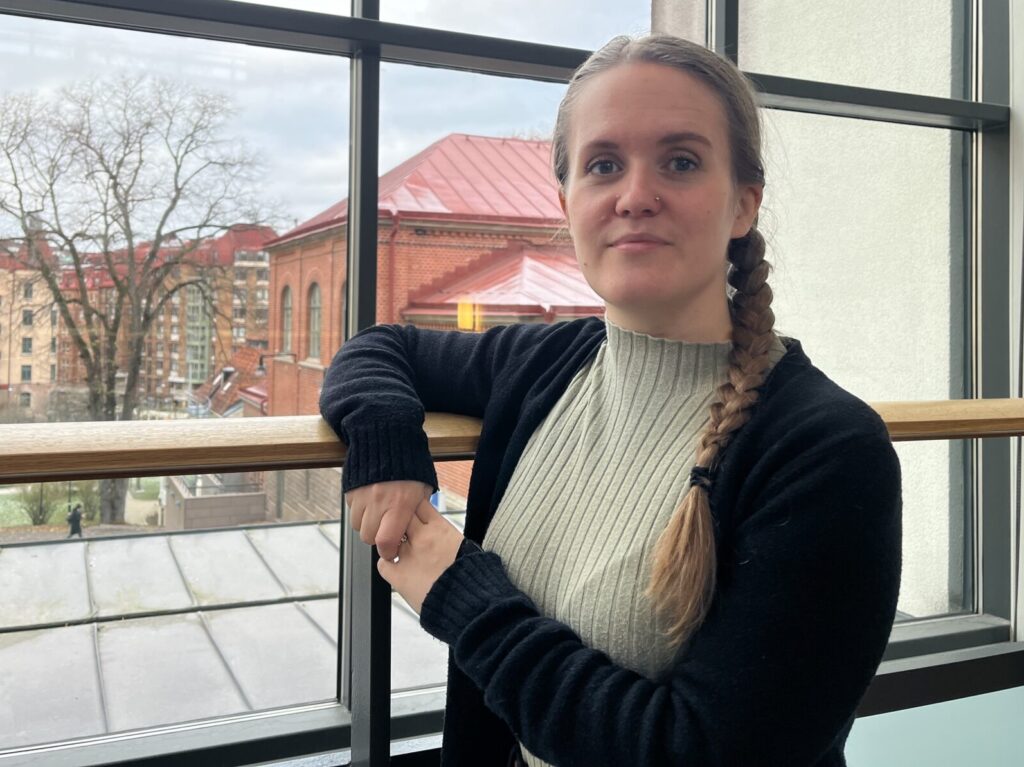
Photo: Elin Nilsson.
Another citizen, Siri Leifsdotter, explains that her worries for the climate has changed over the years but that she recognizes that it is a part of the future.
"I had more anxiety about the climate when I was younger, but I feel like it is a fact that it will change, but that we'll have to wait and see what's going to happen.", says Siri Leifsdotter, 31 years old.
Methodology

The data was collected through the in-depth climate scenario service on SMHI:s website. SMHI calculated this data in 2021, but it was collected by the journalist in November 2024.

The data was collected by choosing different values on the service. By choosing meteorology it was then possible to go further with the gathering. Sweden as a whole was then chosen as geographical area, temperature as indicator, the whole year as time, 2071-2100 as period and absolute value as type of value. This was done for each RCP; RCP 2,6, 4,5 and 8,5.

The three different datasets were then combined, narrowed down to fewer years to make it easier to comprehend (2024, 2030, 2040, 2050, 2060, 2070, 2080, 2090 and 2100) and visualised with Datawrapper.