Maite Allerborn, Isa Baas, Lynn van den Brink and Merel Gelders
Friday 23 May 2025 17.00 CEST


Photograph: Screenshots of accounts that use childlike images and symbols. Their faces are blurred by the authors.
Video: Lynn van den Brink
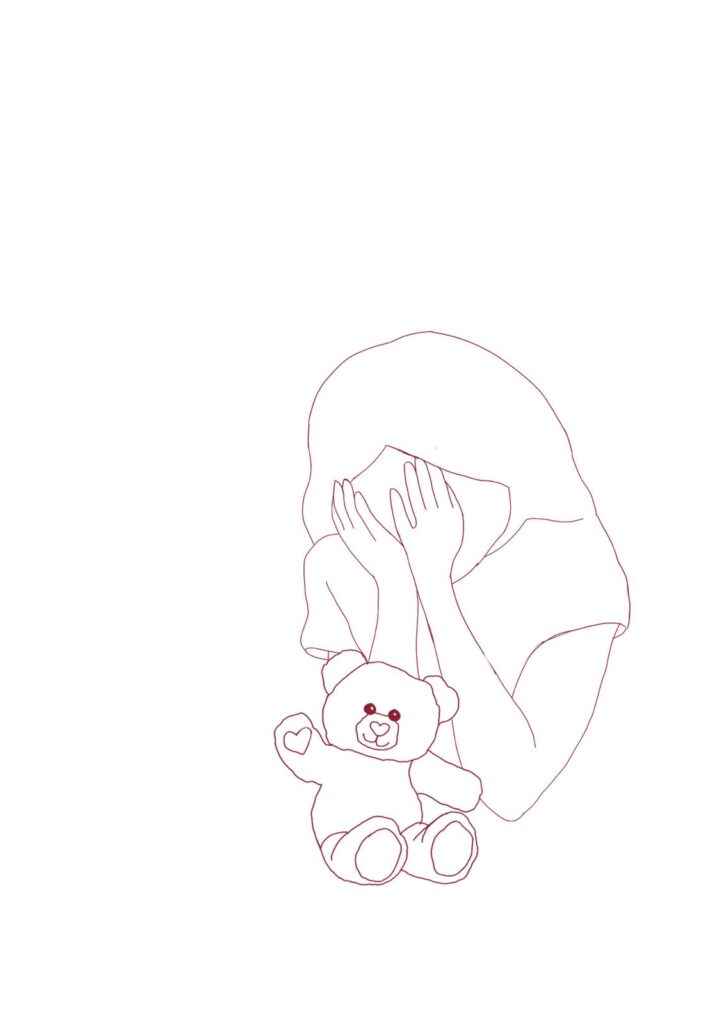
Illustration: Maite Allerborn
OnlyFans claims to
ban
childlike content –
so why is
it still
there?
Illustration: Maite Allerborn
OnlyFans, the British subscription platform used by millions for adult content, is hosting a deeply troubling trend: childlike material is thriving on the site. Adult performers are profiting from explicit content in which they imitate the appearance of children – a practice experts warn could pave the way to child sexual abuse. At the same time, the platform is failing to stop underage users from appearing on the platform.
OnlyFans seems to have improved their age verification system for creators since a 2021 BBC investigation revealed that minors were able to set up accounts. But four years later, children continue to slip through the cracks. “Either they create the accounts themselves by lying about their age, or they’re pressured by adult predators into uploading content,” says Samuel Comblez, director at e-Enfance, a French association for the protection of minors on the internet.
Concerns of children being shown on OnlyFans have continued to emerge globally. In 2024, the US-based CyberTipline received 352 reports of Child Sexual Abuse Material (CSAM) from Fenix International, OnlyFans’ parent company. In France, reports are significantly lower, totalling around a dozen each year. However, this still raises serious concerns, emphasizes Comblez: “The number of reports we get isn’t necessarily reassuring, it might mean that children simply don’t see being on this platform as an issue.”
Child Focus Belgium, a foundation for missing and sexually exploited children, also confirms that they still receive reports about alleged minors appearing on OnlyFans – though it is not always able to verify their exact ages.
To make an account on OnlyFans, you need to upload a scan of your ID and a photo of you holding it. Age verification systems based on images, like the one OnlyFans uses, are not very secure, says digital ID researcher René Mayrhofer. “These systems can be fooled by people who use an ID of someone who looks like them if the ID-holder collaborates.” It might even be less secure with new artificial intelligence (AI) developments, he adds: “AI generated photos will be good enough to fool these systems in the short term.”
The most common method minors use to access OnlyFans is using the identity documents of a close adult with their consent, says Comblez. “Some go further by digitally altering their ID to match a fake date of birth with their face.”
Mayrhofer guesses that OnlyFans does “exactly as much as they need to do to pass the regulatory checkbox and not anything more. And they themselves will know that it isn’t fully effective.”
Childified
Apart from actual minors on OnlyFans, experts around the world warn about the dangers of creators who look like minors. “Members of the public come across content on adult websites that they believe depicts a child – only after reviewing it, we sometimes find that it isn’t a minor at all, but an adult performer who presents themselves as very young,” says Jacques Marcoux, director of research and analytics at the Canadian Centre for Child Protection. “It’s a very concerning issue.”
Rosa*, a senior content analyst at the Internet Watch Foundation, notes that stylized portrayals of minors are common in mainstream porn. “Categories like teen, taboo, and incest often feature performers dressed as schoolchildren. Usually, it’s quite easy for us to spot that they’re not actually minors, as the content on big porn sites is often professionally produced.” But on OnlyFans, where users make and sell their own content behind a paywall, spotting CSAM is much harder.
While professionals can usually spot adults acting as children, the opposite is more difficult. “It’s especially challenging when children are adultified,” says Rosa. “Often it’s very hard to confidently say whether someone is, for example, 14 because they may look like they’re 20.”
The boundaries are blurring, Rosa believes. “It can be very hard to determine whether a child is a child because of how developed they can look, the makeup, the lighting, the posing.”
Big business: lollipops and teddy bears
Even when no children are involved, the imitation of youth has become a trend in adult content. Pigtails, school uniforms, soft toys, and childlike expressions appear on OnlyFans. This phenomenon – referred to as infantilisation, or childification – involves adults imitating the behaviour and appearance of children in sexually suggestive ways. On OnlyFans, it’s become not only visible, but profitable.
“Infantilised images normalise predatory behaviour by adults. In essence, it says that it’s okay for adult men to have sex with children,” explains Eric Silverman, researcher at Culture Reframed, an organisation focused on raising awareness about the harms of pornography to youth.
Not everyone agrees with that statement. A Canadian OnlyFans model known as Ariel Rebel doesn’t believe infantilisation to be harmful. “One person will call a schoolgirl outfit infantilisation, while others will just be talking about kinks,” she says. “Porn and OnlyFans are not the problem. They’re a representation of our society.”
But academics say this belief ignores larger issues. “Whether infantilised content causes someone to act, it legitimises beliefs and contributes to a broader context for sexual violence,” says Fiona Vera-Gray, professor of sexual violence at London Metropolitan University. “These images encourage people to be sexually aroused by representations of children. That’s harmful and dangerous.”
Teddy bear and lollipop emojis are popular on OnlyFans. “Even though you’re not watching an actual child, creators are using all the iconography and representations of childhood,” says Vera-Gray, “this can be used by men who are considering offending in order to feel like this is a valid and legitimate form of sexual desire.”
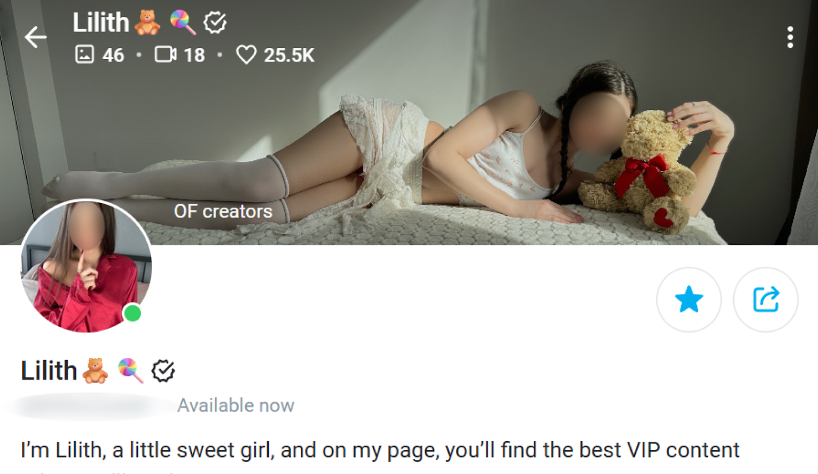
Photograph: Screenshot of an account that uses childlike images and symbols. Their face is blurred by the authors.
There are third-party agencies that recruit models for OnlyFans. OnlyMym is one of them. A spokesperson from OnlyMym confirms: “Age play is very popular.” Creators enhance their marketability by pretending to be younger and using childlike iconography and vocabulary in their profiles. “Some of the girls have been saying they are 19 for years,” the spokesperson adds.
Hanson recalls an agency worker who manages OnlyFans creators telling her: “The girls who looked the youngest were the most in demand and made the most money, so we’d promote them as such.”
The lure of OnlyFans-fame is powerful. Part of that is its profitability, as in 2023 OnlyFans paid out £1.5bn to its creators. 20-year-old Sophie Rain, claims to have built a multimillion-pound career marketing herself as a virgin on the platform. But despite high-profile success stories, the top 20% earners of OnlyFans make around as little as £270 a month.

Photograph: Screenshot of an account that uses childlike images and symbols. Their face is blurred by the authors.
Age related role play
While OnlyFans markets itself as a platform for “grown-ups” where “trust and safety are fundamental,” advocates for child safety argue that in its current form, it profits off the sexual representation of minors.
In a statement in response to our investigation, OnlyFans emphasizes that accounts we found with childlike content have been approved because the creators are over 18.
This position seems to contradict statements by the CEO of OnlyFans, Keily Blair, regarding the prohibition of age related role play. Researchers argue that, in practice, the platform is allowing child exploitation.
“We moderate all the content on our platform,” claimed Blair, in an interview with the Financial Times, “and one of the things that we pick up on in our pre-check process is any content that looks like it may be underage. If someone was to take an image of themselves and modify it to try and look under 18, for example, it would be picked up in our pre-check.”
Hanson questions this claim: “They say they moderate everything. If that’s true, then why can people still find this content so easily?”
According to Blair, “age related role play” is not allowed on the platform. But suggestive profile pictures of girls in school uniforms remain easy to come across.
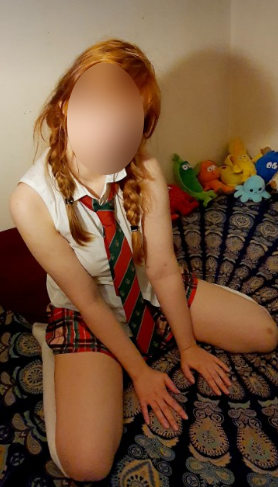
Video: WSJ News. Interview with OnlyFans CEO Keily Blair. Photograph: Screenshot of a profile picture on OnlyFans. Their face is blurred by the authors.
Not catching up
Regulation is struggling to keep up. In the UK, the Online Safety Act now requires platforms to block children from viewing or appearing in pornographic content. Yet enforcement falls short. This year, OnlyFans was fined £1.05 million by Ofcom for failing to provide enough information on how they verify age.
The UK is just one of many countries facing these challenges. Dani Pinter, a lawyer with the US National Center on Sexual Exploitation, says past lawsuits revealed just how little effort big porn platforms made to prevent children from viewing or appearing in content. “They weren’t doing anything to make sure people weren’t being abused,” she says, adding, “none of the porn websites did anything to make sure they knew the identity or age of the individuals or whether they gave consent.”
In the EU, the Digital Services Act requires transparency reports from platforms with over 45 million active users. OnlyFans claims to have fewer users than that, allowing them to bypass stricter regulations which apply to similar platforms.
Hanson argues urgent changes are needed. “I would raise the age of creators to a minimum of 23 to help rid the platform of children. This will add an extra layer of protection,” she says. “Governments around the world need to be much more adept at seeing the harms and stepping in.”
Progress seems slow. “Adult content sites have had about a decade of just being able to do whatever they want. Any kind of movement towards regulation is very quickly used by them to say it’s about censorship or removal of people’s sexual rights and freedoms,” says Vera-Gray.
“A ticking time bomb”
For many survivors of child sexual abuse, the presence of infantilised content can be retraumatising. Vera-Gray asks: “What does it mean for someone who’s experienced child sexual abuse to go on a porn site and repeatedly see all of this iconography about children being sexual and sexualised? What does it mean when millions of people are accessing content that normalises and legitimises the sexual abuse of children?” The concern, she emphasises, is not about prudishness or censorship but about drawing a line where fantasy becomes a form of validation for abuse.
“A study on the ‘barely legal’ genre, which features adult women who look much younger, revealed that college students who watched this content began viewing underage girls more sexually than those who didn’t,” says Silverman. He adds, “young people who consume this material also tend to experience higher rates of sexual coercion and dating violence.” Furthermore, he notes, “they are more likely to believe in rape myths: thinking that someone who is raped deserves it.”
Infantilised content doesn’t just affect viewers. Psychologists warn it takes a significant toll on creators too – particularly young people enticed by the promise of fast money. “There’s a downward spiral,” says Hanson. “Many creators cross boundaries they once thought they never would. They begin to disassociate from their real selves and struggle with emotional connection.”
“Often,” she adds, “creators don’t feel able to talk about it. They think it’s their own fault. I’m worried about that group, I feel like they’re silenced.”
As infantilised sexual content becomes more accessible, the psychological and societal consequences are starting to show – though much remains hidden beneath the surface. “What we’d normally expect with people who are involved in this type of content is that they start seeking psychological help a few years later,” says Hanson. “There’s a lot of exploitation and suffering, but we haven’t really got a window into that yet. It’s a ticking time bomb.”
Despite reaching out to OnlyFans multiple times, the platform did not respond to questions about flaws in their age verification system or the risks associated with infantilised adult performers.
* Rosa is a pseudonym to protect her identity.