
By: Clara Fors Wisbyse, Rodrigo Ribeiro, Hanne De Coninck and Yang Liu
A newly proposed change to the dental system could result in young people getting stuck in long queues. Despite efforts to reduce dental queues in Västra Götaland, young people in the region’s rural areas face an important challenge.
“I can understand if there’s a queue of a few years, but what the hell, it’s almost been ten years”, says Jimmy Söderkvist, 37.
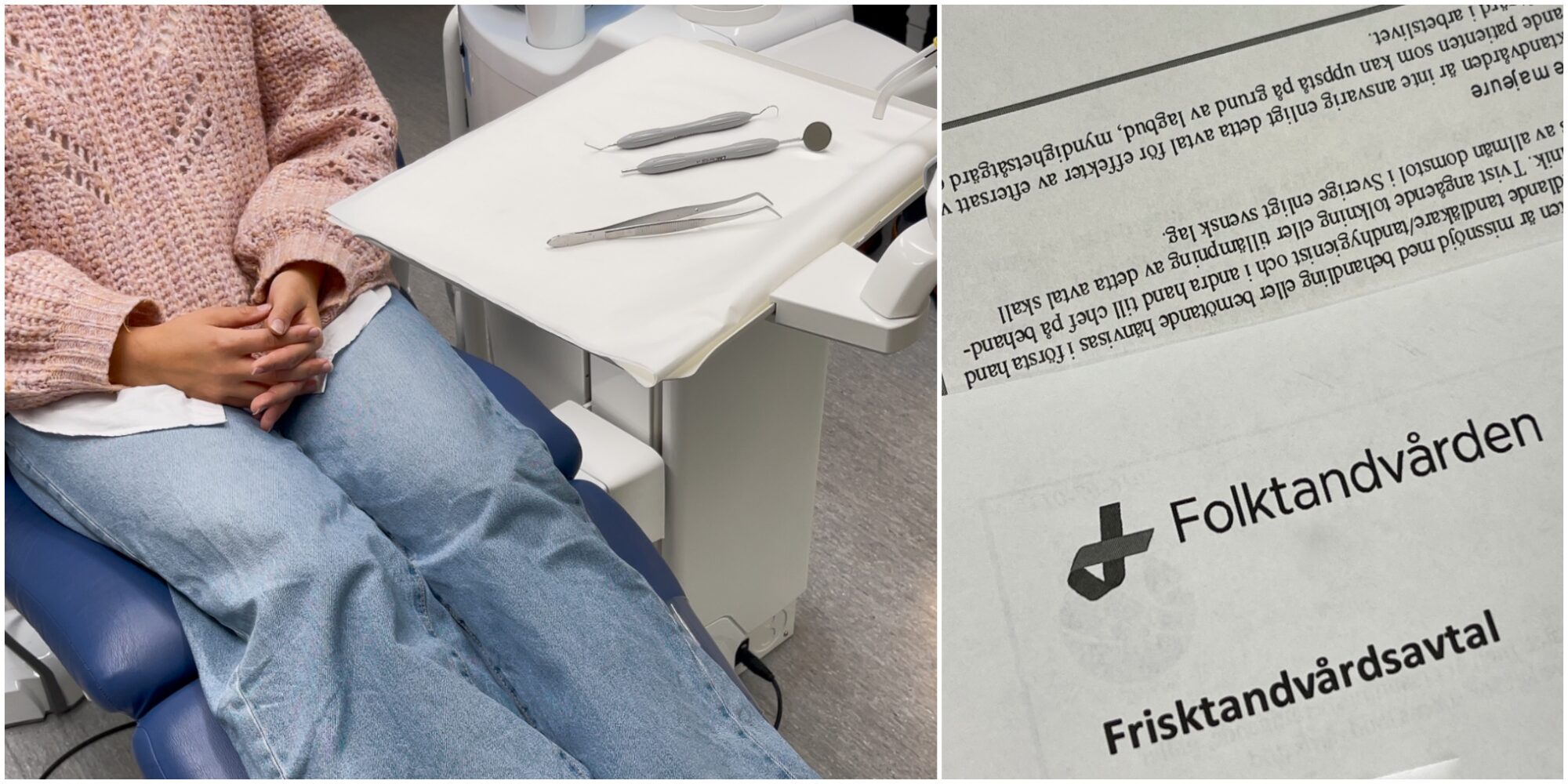
He is waiting for an appointment at the public dental clinic, Frisktandvården, in Grästorp. The reason for this is simple: he wants the contract called Frisktandvårdsavtal. Konstatinos Bougas, program director and senior lecturer at Sahlgrenska Academy, explains the contract:
“The patient has an obligation to pay every month and in return, the clinic is obligated to contact the patients within a certain amount of time.”
John Tingwall is in a similar position to Jimmy. He is longing for the contract that he once turned away.
“When you are 23, you are young and immortal. I’m 39 now and you do not think about it at the time but eventually you start to realize that your teeth will probably become a problem soon.”
For over a decade, young people in Sweden have had subsidized dental care up to and including the year they turn 23. Now the Swedish government is proposing to lower the age limit to 19. In the newly proposed law, Funktionsrätt Sverige, a referral body for legislative proposals, points out that: “many people do not enter working life until long after they turn twenty”, suggesting that without a stable income, they are discouraged from seeking dental care.
On their last free visit, young people are offered the chance to sign the contract or pay by appointment and ultimately end up in a patient group at the bottom of the waiting list. Depending on which clinic, it could take years to see a dentist.
Contractless at the end of the queue

In Västra Götaland, there are queues of over a year in 41 clinics. Many are facing long waiting times when trying to get listed as new patients, especially in the countryside.
Jimmy Söderkvist, who lives just a three-minute walk from a public clinic, is now registered at a private clinic at his worksite, 28 kilometres away.
“The reason I wanted to enroll in public dental care was because I wanted the contract they have,” he says.
He claims to have first called the clinic when he was 29 years old and several times after that over an eight-year period. Yet a spot has still not opened for him. A receptionist who wishes to remain anonymous says:
“I don’t know anything about an eight-year period. But we haven’t taken in new patients from our waitlist for a really long time.”
Peter Lingström, professor of cariology at Gothenburg University, explains the consequences to being stuck in the queue:

“There is a risk that the oral health will get worse. Initial problems related to different oral diseases, such as caries lesions, may develop and become larger. Regular check-up forms the basis for good oral health.”
As of today, 780.000 patients have the contract, and six regions, mainly in the north, do not even offer it.
Bougas explains how the contract has shifted from its initial purpose. It was created as an affordable dental plan for young adults aged 19 to 30 as their absence was noticed by dental professionals.
“Later, it was modified to include everybody and became more of an insurance”, he says.
Waiting in miscontent
When asked if there are people with a contract stuck in the queue, Anne-Charlotte Sundelin, head of dentistry in Västra Götaland, replies:
“It shouldn’t be since they have a contract with us.”
However, ARN, the National Board for Consumer Disputes, has received several complaints concerning the Frisktandvårdsavtal nationally. One of them, from June this year, written by a 41-year-old patient listed at Gothenburg’s Gibraltar clinic reads:
“I should have been called to my last visit within 24 months. Despite this I was summoned after three years”
Sundelin, confirms previous issues with this clinic: “If ARN gets a claim we usually get contacted directly, but I haven’t heard about this. Gibraltar is a clinic that we’ve had trouble with since we closed down Guldheden a couple of years ago, and many patients want to join Gibraltar. They are expecting to be on track with their patients this spring.”
During 2019 around 60.000 adult patients in Västra Götaland over the age of 24 were called later than agreed for their checkups. 23 % of the summons were delayed, and four years later, in 2023 that number was lowered to 11 %. This indicates that the region of Västra Götaland has come a long way in shortening down their queues for existing patients. However, the new proposal still presents twenty-year-olds with a hard choice that could send them to the bottom of years-long waiting lists.
“We have to adhere to the political decisions but as the head of administration and a dentist I don’t want young people to lose touch with dental health care,” says Sundelin.