
The hidden discrimination in Gothenburg’s nightlife: “I am not welcome here”
Gothenburg • It is Saturday night at Avenyn. People are gathering outside the nightclubs, hoping for a fun night out. Our investigation shows that far from everyone feels welcome – and that redemption becomes difficult when the justice system needs clear evidence of ethnic discrimination happening in the dark.
By Emily Hellichius, Kaarlo Kulmanen, Alexander Khan, Shinjini Chatterjee
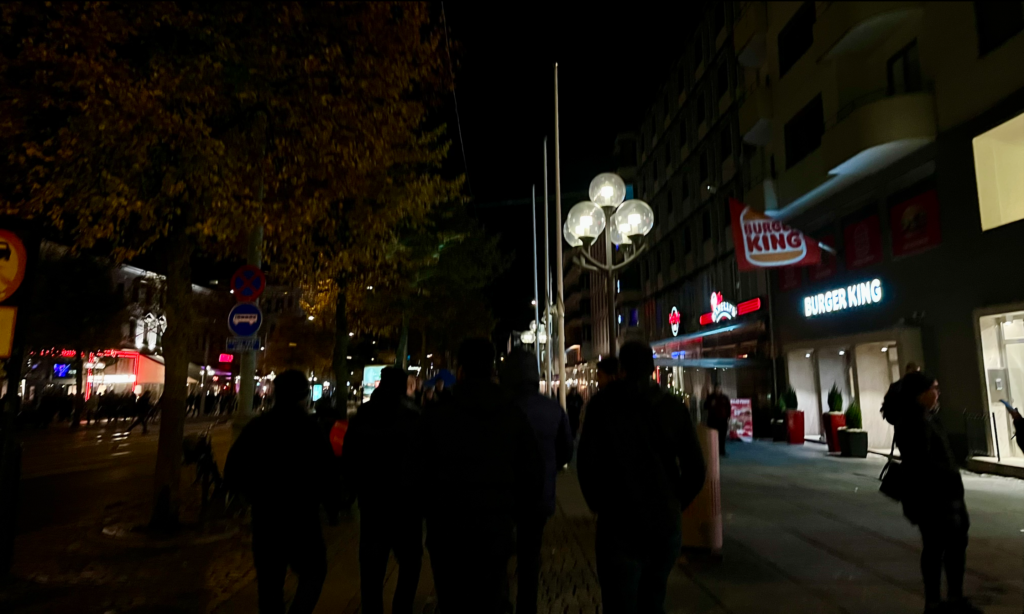
A chilly wind blows along the street known for its nightlife and clubbing scene, Avenyn, in Gothenburg. It’s Saturday night, darkness has settled over the city, and people have gathered to go out and party. One Dominican gentleman on the street states that there is not a single nightclub in Gothenburg that has not rejected him. One group outside a nightclub says that they do not experience discrimination, since they speak Swedish.
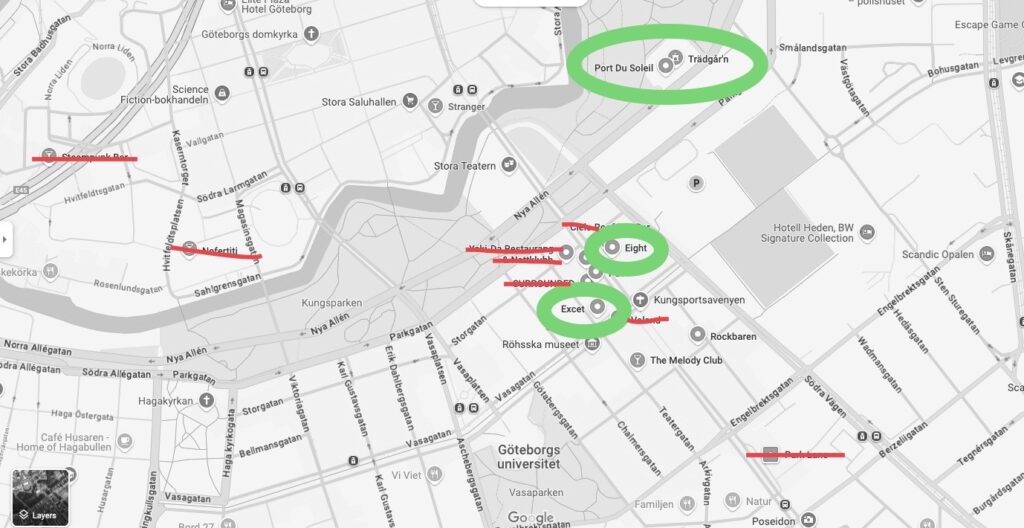
We have tried to map ethnic discrimination in the nightlife of Gothenburg, since the Discrimination Act prohibits discrimination based on ethnic affiliation in Sweden. “Not being discriminated against is a human right”, the Discrimination Ombudsman, DO, states on their site. Nevertheless, discrimination occurs – often in secret, and away from public eyes.
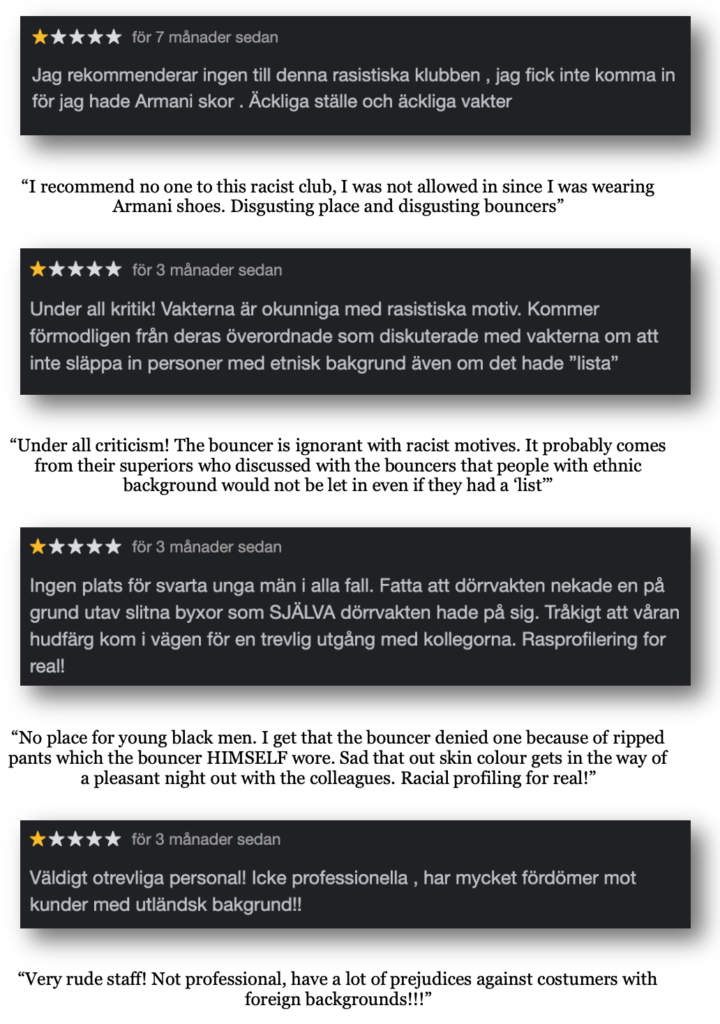
Out of 5 698 Google reviews, 133 cited that racial or ethnic discrimination was the reason for non-entry. When trying to reach the people stating that discrimination happened, none answer. People do not want to talk about it openly. The DO Researcher Björn Brodin says:
“We are working to increase the number of complaints because then we can work better with these questions. The DO is also having a dialogue with civil society and organisations which we hope will increase knowledge and trust in the legislative process.”
Was denied entrance – did not look “Swedish”
One year ago, Simon Rudhede, today 24 years old, and his friends were hanging out. They went to one of the clubs nearby Avenyn.

“The bouncer takes everyone’s identification. Then he looks around at everyone and says something like ‘No, unfortunately… ehm… You’re not allowed in because you are wearing hoodies,’” Simon Rudhede says. “We were quite put off, because that nightclub doesn’t usually have a strict dress code, and my friends have come in before in similar attire.”
According to Simon Rudhede, he was the only one who did not look “Swedish” – and he felt like he was the reason why they were not let in. “That could absolutely be a reason for his response. I remember thinking that at the time,” Simon Rudhede says. “I believe that when people from the suburbs come into the city to have fun, but then feel ‘I am not welcome here’, segregation becomes worse.”
Club owner: “We have our company policies”
On Avenyn, the lines to the clubs are starting to fill up. One man explains that he is working as a bouncer, and that ethnic discrimination certainly does occur. He states that two of the main prejudices amongst his colleagues in the industry are that people of certain skin colours want to visit clubs to sell drugs and that “black guys” make women uncomfortable.
One of the owners of nightclubs in Gothenburg writes in an email: “We have our company policies that we work according to, and which include, among other things, work to counteract discrimination at our clubs. All staff adhere to our values and our policies upon employment. We preserve a pleasant and safe atmosphere inside our nightclubs and welcome all people who have a positive attitude. The dress code looks a little different depending on which club it applies to, but basically you must be clean, put together, no training clothes or clothes that are perceived as provocative are accepted.”
Hard to prove – even for the police
Between 2022 until this October, six reports have been made to the police authorities stating that discrimination has taken place in the nightlife of Gothenburg. Three of them state that it was because of racial motives – none went up to court.
Unlawful discrimination is a difficult crime to prove, since racist motives are rarely expressed openly and explanations such as intoxication are usual in nightlife, Police Inspector Andrea Hammar explains.
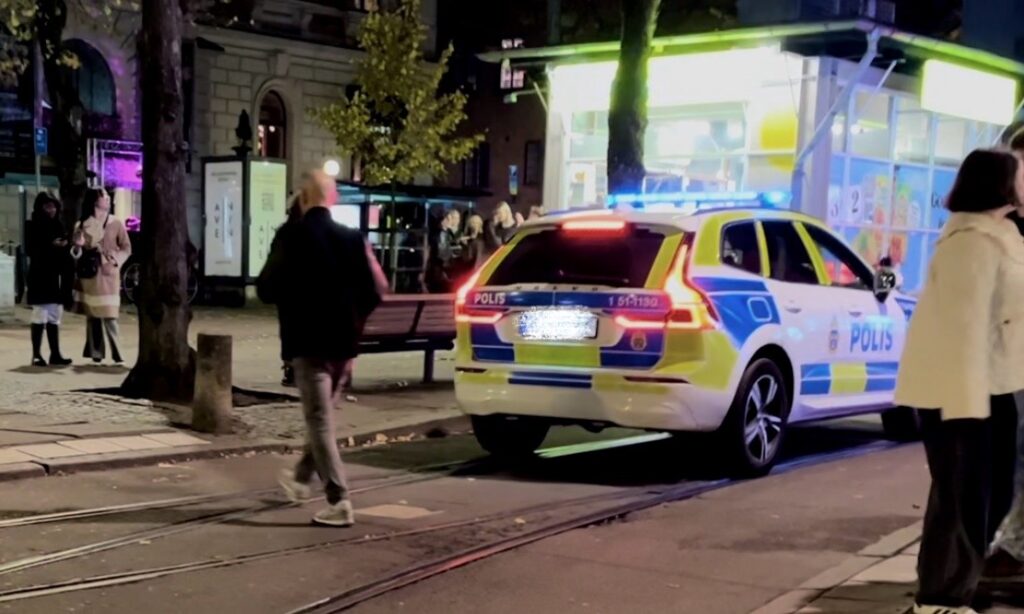
“One might think that it is only necessary to be able to prove that the person is not too drunk. But there are examples of bouncers making misjudgements and where the court considered that in the environment in which security find themselves, there must be a reasonable amount of room to be able to make a misjudgement regarding this. It then becomes very difficult to prove that a crime occurred.”
More evidence is required, the Inspector emphasises, noting that in Gothenburg’s nightlife there is not always room for such far-reaching measures – and that even when the resources are available, it is not always enough for prosecution.