
By Shinjini Chatterjee
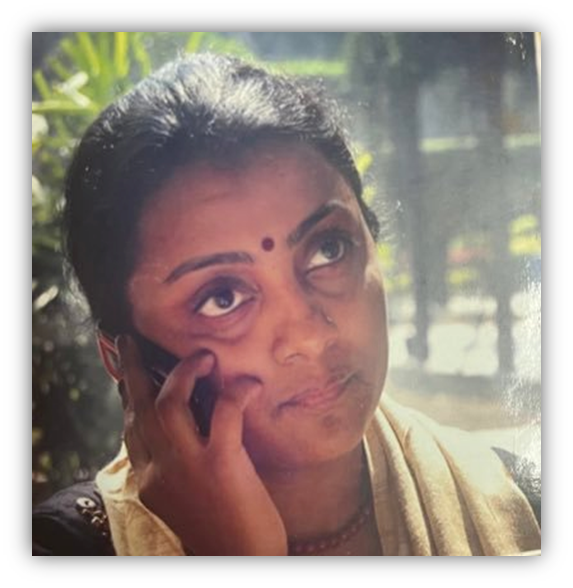
Deeksha Bhuiyan , Photo Credit: Twitter
Bhuiyan’s entry into journalism was far from conventional. “I never planned to be an investigative journalist, I am an accidental journalist’’, she says.
Growing up in Asansol, India, she was a shy and introverted child. Raised in an orthodox family, that did not support her dreams, she carved her own path. Today, her investigations on human trafficking have left a lasting impact.
Reaching Deeksha Bhuiyan for an interview took persistence, but tenacity paid off. After connecting through a mutual contact and subsequent emails to discuss her work, we eventually spoke over a call. During the interview she shared her experiences in combating human trafficking.
Bhuiyan’s career began in the police force, where she was assigned to cover the education department. However, she soon shifted to crime beat reporting, as child crime cases fascinated her.
While human trafficking is a globally well-known issue , Bhuiyan’s approach stands out as her focus is on using local voices as a source for uncovering human trafficking networks. “A roadside walker or Chaiwala (tea vendor) could be a source’’, she says.
Her ability to highlight overlooked voices and apply it in her work, truly set her apart.
“I got into this profession to learn, not to earn money”, she states.
Unlike many reporters, who primarily rely on official sources, Bhuiyan uses the unconventional ones. Her story on Diamond Harbor, about a girl who was trafficked and her body was found in a ruptured state, not just exposed the grim reality of human trafficking in West Bengal but serves as a classic example of how local knowledge matters in uncovering hidden crimes.
“People talk and sometimes that is where the truth is”, she utters.
While her approach is unique, her views on the media landscape are just as uncompromising. “Neutral journalism does not exist in India” , she asserts. Her advice to young journalists is stark, “If you want to bring out the truth, be independent or join a neutral media house. Do not be a journalist in India.”
Despite her commitment to expose crimes, she faced challenges within her own media house, Ananda Bazar Patrika. During her collaborative investigation with Simanta Maitra, about Sujoy Biswas,a 33-year-old man who trafficked minor girls to Bangladesh and became a millionaire through an illegal network, she encountered resistance from her bosses who viewed it as a “normal crime”. “They probably wanted to focus on profits”, she says. “I had to fight with them a lot to make them understand the significance of the story”, she recalls.
As Bhuiyan’s work continues, the safety of journalists and victims remains untackled. “Journalists on the ground get injured, but that does not break them”, she explains. When asked about her own safety measures, “I am strong enough to handle any situation”, she says with confidence, adding with a laugh, “Actually, I have taken some self-defence classes just to be prepared for the risks that arise with the job.”
Bhuiyan also personally accompanied a Bangladeshi boy who was trafficked to India to help him reconnect with his family. However, she said, “The boy faced threats” explaining even victims are at risk.
Over time Bhuiyan has realized that intelligence and awareness are crucial qualities for a journalist. “With experience, you learn”, she explains. In Bengali she advices: “Chok Kaan Khola Raakho” (keep your eyes and ears open) as it is essential in navigating unpredictable situations.
To her, listening more and talking less is crucial in this field, along with finding, building and nurturing sources.
| The Journalist at a Glance Born: September 1978 Education: English Honours, University of Calcutta Started investigations :2009 Awards: The Kolkata American Consulate Award on Investigating Human Trafficking (2018) and The Sishushri Award (West Bengal Child Rights Commission). |